The general category for posts on this blog.

The Disaster Disaster Recovery Plan

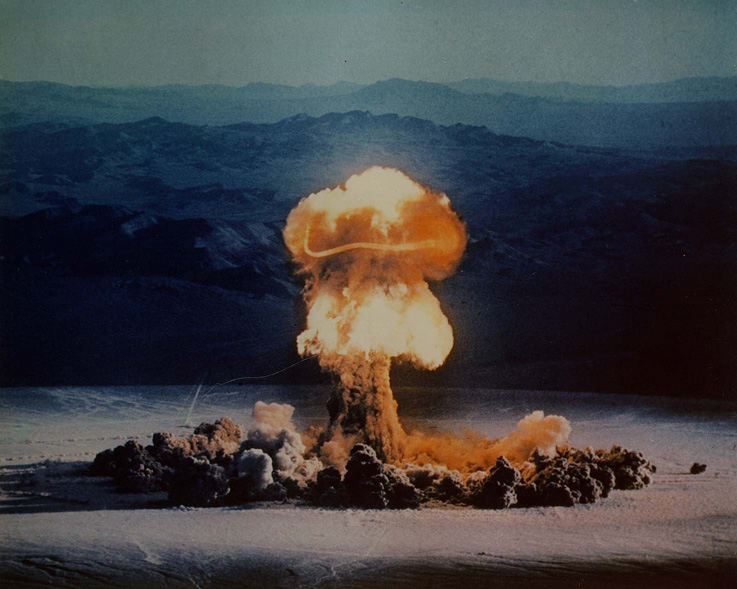
Mushroom CloudOnce upon a time, I worked for a company that put out a mandate of updating our disaster recovery plans.  Seeing as how most of the company didn’t have them, it really meant creating disaster recovery plans.  Due to a confluence of events, I happened to be the senior guy in our department who wasn’t a manager, and so it fell to me to craft our plans.

As with any good company, we did have some preparations in place even if we didn’t have a formal plan.  We had an off site backup data center which we could switch over to should a service at the primary site go offline.  And in that site we had an approximate copy of our primary site.  Approximate in that the intention of the backup site was to limp the company along until the primary site could be restored, not in that the backup could become the new primary.  So where the primary site had 3 servers doing a task, the backup site had 1, enough to do the job but not enough to do it without frustration.

So there began a series of meetings between departments as we began updating and creating our recovery plans, budgets were outlined and all the ducks were put in a row.  In one of these meetings, I noticed a flaw in one of the other department’s plans.  I brought it up, but since I’d only been there a year and was dealing with people who’d been with the company for 5, 10, even 25 years, I was ignored.  I was told, “You don’t know what you’re talking about.”  To that end, I decided to be sure I was right.  I began researching the other plans and looking for flaws.

My own department’s plan was simple: money.  We needed to spend the money to duplicate our server functions.  I called the companies we licensed software from and got the okay and licenses to maintain a fail-over site without spending any more money on licenses.  I wrote up hardware orders so that where we had 3 servers doing a task at the primary location we would have 3 servers waiting to take over if the primary failed.  My plan done, I had plenty of time to look at other people’s work.  So I did, and I made a nuisance of myself, sending emails and showing up for meetings I wasn’t invited to in an effort to actually make our company’s disaster recovery capable of recovery.  Eventually, I got told to stop.  The message was clear.  I was to focus on my own plan and leave everyone else alone.

I dove back into my disaster recovery plan.  You see, because of the flaws in the other plans, my original plan wouldn’t work.  It had to be redone.  I went to my boss and made one request.  On presentation day, I wanted to go last.

The day came to show off our new plans.  I sat in the back and waited through each department.  One by one they went to the podium and showed charts and laid out plans that illustrated they were well on their way to being ready, each department patting themselves on the back.  Finally, it was my turn.  I got up and started handing out my plan.  It was very short.  A cover sheet and then just two pieces of paper beneath that.  As I made my way through the room people began muttering to each other.  I got to the podium and said, “If you will turn to page one of the packet I’ve handed out you will clearly see the full extent of my disaster recovery plan.”

It was a copy of my resume.

“If the primary data center were to go offline, I would, in reaction to this disaster, begin sending out copies of my resume in an effort to find another job, because I certainly wouldn’t want to work here anymore.”  I could see my boss turning red with rage.  I could also see the managers for other departments shooting dirty looks at me.  Then I opened up my PowerPoint presentation.  I quickly showed the single page of my real disaster recovery plan: buy servers, install software, use extra license keys I’d already obtained.  Then I showed how my plan would still fail due to a flaw in Department X’s plan.  Then I showed that without fixing another flaw in Department Y’s plan, Departments A, B and C would fail.  And then I showed how Department M had overlooked a critical piece of hardware for which there was no backup and rendered everyone moot because the only working mainframe terminal in the backup site would be the one hooked directly to the mainframe.  Their plan actually had them unhooking a piece of equipment, loading it on a truck, and driving it nearly two thousand miles to the backup site, rather than actually purchasing a duplicate – probably because it was extremely expensive.  “So, as you can clearly see, my only reasonable course of action – since I was instructed not to involve myself in the affairs of other departments – is to find another job.”

The fallout from that meeting was huge.  First, I got yelled at.  Then, I got apologized to as they discovered I was right.  Eventually, new plans were drawn up and big money was spent, but our recovery plan was actually capable of recovering from disaster.  To date, that company has not had a disaster from which recovery was needed, but that’s not the point.  The point is that each and every department concerned themselves only with their own particular areas and no one had been assigned the task of looking at the places where they relied on another department.  Each one was happy to be able to say “We have a back up for our functions” and didn’t bother to examine if slot where their tab was supposed to insert was being covered, they just assumed it was someone else’s responsibility and it would be handled.

Since then, I’ve always tried to make sure I keep an eye on the big picture when I do things.  And I try to be open to suggestions and/or criticism from others on the off-chance that I’ve missed something big because I’m too close to it.  Outside that, there is no point to this story other than I just like to share it.

Infinite Dimensions

Previously, I wrote about there being two kinds of time travel.  More specifically that there are only two kinds that work and make sense without leaving giant gaping holes in the stories.  Now I’m going to spin-off into an examination of dimensions…

The Big Bang

If you ignore the faith-based beliefs that the Universe just sprang into existence when a deity willed it to be, then you pretty much have to accept the theory of the Big Bang, that everything exploded out of “something”.  For a while, science and science fiction grasped on to the idea that eventually at some point down the line, the Universe would stop expanding and would begin to contract.  People really like this idea because it lends itself into a nice loop.  Everything racing back together, getting faster and faster, exceeding the speed of light, warping back in time billions and billions of years and then exploding again.  The end is the beginning.

Assuming a warping of space and time, it isn’t hard to jump to the idea that when the Big Bang happens again that it doesn’t have to be exactly the same.  In one way of looking at it each version of the Universe is happening in sequence.  The end of Universe 1 is the beginning of Universe 2, and end of U 2 is the beginning of U 3, and U 3 to U 4 and so on.  Thanks to the warping of time and space, however, you can get to the idea that these Universes are also happening simultaneously but somehow out of phase with each other.  This conjures up the idea of wonderful strangeness, like in our Universe there are nine planets (Pluto, I’ll never let you go) but in one of our neighbors, X-1 or X+1, there are ten and due to some sort of anomaly, that tenth planet occasionally influences or even crosses over into our Universe.  Your keys weren’t sitting on the table the whole time you were looking, they had actually slipped into X-1 but found their way back eventually.

Now we have evidence that the expansion of the Universe isn’t slowing, and may even be speeding up.  It’s hard to tell what is going on with all the dark matter out there and whatnot.

Echoes

But how does an examination of dimensions of this sort relate to time travel?  You have to stop thinking so three dimensionally.  What if the Big Bang wasn’t just a simple explosion, but instead ripped right through space and time.  Now you have Universe 1 beginning, and then a tiny fraction of a second later Universe 1 sub 1 begins.  A tiny fraction later Universe 1 sub 2 begins, and U 1 sub 3 shortly after, and U 1 sub 4, and so on.  And infinite number of Universes trailing behind us through time.  And since we are just as likely to not be the first Universe as we are to be it, there are an infinite number of Universes extending out in front of us as well.

Now, when you travel through time, you aren’t really.  You are simply jumping to another copy of our own Universe.  Jumping forward in time by one hour is actually sliding to a Universe that began exactly as ours did but an hour out of alignment.

The very first time that I thought about this was when I was watching the movie Bill & Ted’s Excellent Adventure.  In it, Rufus explains to them that no matter what they do or where they go, they have to keep an eye on their watch because the time in San Dimas is always moving forward.  This is because the phone booth isn’t actually travelling in time, it is sliding between dimensions where the intended time is happening “right now” and when they return to their own dimension if they’ve been gone for an hour it will be an hour since they left.  Time marches on, so to speak.  The only real problem with that theory as far as the movie is concerned is Rufus’ stated reason for being there.  His mission would appear to be a closed loop (he’s going back in time to help them with their report because he did go back in time to help them with their report that they almost failed), but then you get the paradox of how that loop got started.  It would have to be that a Rufus (or someone) from a Universe that didn’t have a successful Bill & Ted pinpointed the need for them to pass the history exam 700 years prior (or however long they needed) and traveled to the appropriate world to fix it, then returned home to live in his unacceptable world (or maybe he didn’t go home).  In that world, 700 years later, Rufus climbs into a time machine in a perfectly excellent world to go back 700 years to ensure it still happens… or rather, that it happens for someone else.  So either lots more cross Universe communication is happening, or only one world every 700 years gets to be excellent.  In a manner of speaking.

Of course, the second movie completely throws that out the window with all the jumping forward and backward and delivering items to themselves.

But assuming the Echoes theory is true, it means that you can’t change your past or future.  You can only change the worlds offset from your own, and in order for your world to change an offset you needs to be the instigator of change.

No matter what, thinking about time travel this much will probably give me an aneurysm.

Stop with the grouping already!

In MMOs, I am a strong advocate of grouping.  However, even though I often think that people who want to play a game with thousands, or millions, of other people and NOT play with them is a bit silly, I’ve never faulted a game for allowing that style of play (though I will fault them for making solo play the “best” way to play in every aspect – I’m looking at you, World of Warcraft, you and your game from level 1 to 85).  I am, at the core, all about options.

Facebook Grouping
Forced Grouping?

That would be why this makes me so mad.  Plenty of people out there use multiple social networks, and to make things easier they try to link them together so they can make one update and have it show up everywhere.  Facebook has decided that they would like to marginalize certain types of this synchronizing.  If I click that link that says “See 19 more posts from Twitter” it will expand and show me around 2 days worth of Twitter updates, completely out of their proper order in my feed.

Now, I understand, on some level, what Facebook is trying to achieve.  People who play games are often inundated with “spam” from those games and so Facebook decided it would try to clean things up by grouping updates from Applications.  Twitter is an Application.

The fault here is that there is no option to not group updates from Applications.  This is what I get, forced grouping.

There are solutions.  I can use an application like TweetDeck, which posts the same update to multiple sources directly.  But then I need to install TweetDeck everywhere, including my phone, in order to get the same functionality.  But that only solves it for my updates.  The dozens of other people I know who use the Twitter Application will continue to be grouped.  It would be better if Facebook game me the option to choose if Applications were grouped.  Better still, let me choose per Application if I want their updates grouped.

Hopefully, Facebook will get their heads out of their asses at some point and fix this.  If they don’t, it’ll just be one more reason I find myself drifting away from Facebook…

Distress

I know that I am guilty of driving past a stranded motorist on the side of the road.  In the age of ubiquitous cell phones, I can almost safely assume that a person sitting out of traffic has called a friend or AAA or a towing service, or in the Atlanta area on the highways that a HERO vehicle will be along shortly.  I consider this to be acceptable.  Especially in the middle of the day, off the side of the road, this person is very likely to be okay.

However, when a car is stalled and is blocking traffic, I usually pull up and ask if they need help.  Most of the time they say no, whether because they don’t need help or because the bald goatee’d strange guy is asking I don’t know, but at least I’ve asked.  Occasionally, people even say yes, and I help them.  Not often, because the truth is that it is fairly rare for a car to actually die completely in traffic and not be able to get off the road.  I’ve had cars die a few times, but in almost every case I was able to limp them off the road.

Yesterday, the wife’s car died while waiting at a stop light.  She called me, I told her to call the service station we use and have them send a truck, and then I packed up my stuff and left work to go help.  In the time it took me to get there, more than 20 minutes, many cars had gone by her honking and yelling.  One guy did help her slightly, and pushed her car forward enough that people could get around her easier, but didn’t help her get out of the road.  After I got there, I witnessed a large number of people continue to honk and yell and drive around.  I tried to move the car myself, but it was slightly uphill and I wasn’t going anywhere.  Then a guy in a truck towing a trailer asked if we needed help.  I said yes, he actually drove to a nearby gas station, parked, and ran back over to help.  The two of us pushed the car through the intersection and into a turn lane out of traffic.

For well over a half hour, the wife sat in traffic as people honked and yelled, complaining and upset at the jam her dead car was causing.  Out of all of those people, only two bothered to help.  I find this indicative of most people in general.  They would rather sit and complain about something being crappy rather than to actually take action to try to make it less crappy.  So many people would rather be the victim than the hero if being the hero means they have to actually do something.

I Love Sarah Jane

It amazes me sometimes that things can exist that I am not aware of.  Especially when they are things that if I had known of them I would have loved.  So now that I know about it, I’m a little annoyed that I’ve missed out on three years of loving it.  But what can you do?

Well, you can watch this…

Insanity 2: Electric Boogaloo

Second week complete.  See the first week’s post here.

So how did it go?  This is probably the most cardio work I’ve done in a very long time.  There was a moment, more than a decade ago, where I joined a gym and went every day and ran about 5 miles per day.  That might have been more than the Insanity workout, but I don’t remember it being this exhausting.

The one thing I like most about this workout is that while I am very tired at the end of the workout, after a little rest, some water and food, I feel good.  I don’t feel wiped out.  I don’t hurt for days.

I’m still behind the experts.  I have to rest more often than the people on the DVD, and I’m seriously considering altering the program to repeat month 1 twice and then do month 2 twice in other to give myself more opportunity to progress, but I’ve got a couple of weeks before I need to make that decision.  For now, I just feel great that I’m able to complete it each day.

I will be running the Peachtree Road Race again this year, and one of the goals of all this is to beat my time from last year of 1:41:31.  Just for frame of reference for my time, the Peachtree is a 10k, or 6.2 miles, and the Boston Marathon is 26 miles.  The guy who won the Boston Marathon this year ran it in 2:03:02.  He ran an average of a 4.7 minute mile.  I ran a 16.37 minute mile.  I don’t expect to ever be quite that fast, but I’d obviously love to bring my time down a bit.  One day, I might even consider running a marathon, but not yet.

Onward to week three…

If you could ask God one question what would it be?

At some point in everyone’s life, be it because they are totally baked or just because it happens to everyone eventually, they’ll have this discussion. If you could ask God one question what would it be?

To begin with, I think it is important to frame the question properly. Which God are you talking to? The Christian God? Allah? Yahweh? Zeus? Odin? Any one of literally dozens and dozens of gods that have paraded through the world over the thousands of years that man has been worshiping them?

The next thing would be to understand the circumstances under which you are being allowed to ask the question. For starters, if you have died and are standing in Heaven talking to God, then that alone answers a whole mess of questions. I mean, because if you were in Valhalla instead of Heaven then just by virtue of being there you’ve answered a pile of questions.

In the end however, none of that matters, because the only question I would ask God, no matter which god it is or under what circumstances, is “If you could ask God one question what would it be?” I figure God would probably know what the most important question in all of creation is, and once I know that I, being a pretty smart fellow, could probably arrive at the answer myself.

Unless God is a dick and tells me that the question he’d ask God would be “If you could ask God one question what would it be?” That’d be just plain mean.

Ask me anything

It Has To Happen Fast

As much as I love the zombie apocalypse genre, it has one glaring major flaw: in a world where horror movies, and specifically zombie movies, exist a zombie apocalypse isn’t likely to happen.  If you were to ask ten random people on the street how to kill a zombie, nine and a half of them will probably know how – aim for the head, destroy the brain, etc.  This, in fact, is one of the things I tend to hate most about various zombie stories.  The movie Scream was fantastic because it subverted the genre of horror films by allowing its character to know about horror films when the norm is for people to wander around in the dark by themselves even after discovering that other people have been killed while wandering around in the dark by themselves.

Unwillingness to Kill

The primary crutch that most zombie stories rely on is the reluctance of people to kill other people, especially friends and family members.  I’m fairly certain most of my friends and family are aware that if they become infected, I might keep them around as long as they are useful but once they turn I’m going to put a spike through their brain.  And while I know there are people out there who would be all protective of their recently dead loved ones, I think the education provided by the cautionary tales of zombie films would be enough to make that rare.

Of course, the real obstacle is a well prepared military.  If the world were to suddenly have pockets of zombies crop up, squads of the National Guard (assuming they aren’t in the Middle East) would be dispatched to deal with the situation.  At the very least they would round-up and contain the undead while researchers worked on possible solutions.  In fact, the real threat here is political, as people in Washington jockey for position concerning the rights of Undead Americans and slow down the response and effectiveness of those trained to deal with situations of a violent nature.

Spread of Infection

Depending on the source, another hill for a zombie apocalypse to shamble over is the nature of the infection.  Traditionally, after the initial turning of corpses or people into flesh-eating monsters, the zombification spreads through bite.  In most stories, the initial cause is a localized accident, either a chemical spill or natural event.  From there and moving to a pass-through-bite scenario, suddenly it seems kind of silly that an apocalypse is even possible.  An event of that sort should take a couple of hours to clean up, maybe a day.

Other stories are more ambitious and use either a specific global event (pass through the tail of a comet) or just go with a generic “the dead started getting up everywhere, all at once, and we don’t know why” nebulous unknown source.  This, at least, has potential.  If you get dozens, hundreds or even thousands of locations with zombies simultaneously, you begin to plausibly stress the available response resources.  You also gain the ability to have pockets of infection go unnoticed and get out of control.

How Would I Do It*

I’ve thought about it a lot.  Obviously, I mean, the title of my blog is “Aim for the Head” and the logo is a zombie.  And as the title of this post says, it has to happen fast.  In my version, the infection that causes the zombies happens in stages.  The first is a virus, the most contagious ever seen.  It’s airborne, it’s in the water, passed by contact and blood.  It is literally everywhere, and it kills 10% of those infected.  Literally a decimation of the world population.  However, those who don’t die appear to be immune to further infection.  That fact, combined with the contagion level of the virus, leads to the decision to stop trying to stop it and instead simply to allow everyone to get infected, killing one out of ten people but leaving the remaining nine immune.

Years later, when people are finally beginning to forget the horror of the Decimation Virus, people start dropping dead.  It’s just like before, people panic that the Decimation is back, everything goes nuts, and in the confusion, people don’t notice right away that the people who died aren’t staying dead.  Within hours, approximately one tenth of the world’s population is one of the walking dead, and that percentage is rising.

The point is, it has to be everywhere, all at once, with relatively high-speed in order to outstrip the ability to respond, so that bolting the front door and staying inside is the smartest decision that too many people will not make.  It has to happen fast.

* If you decide to steal this idea, let me know, perhaps we can collaborate, or maybe we can settle on you just giving me some credit.

Insanity

The last time I wrote in the Getting Fit category was back in October when I ran a 5k.  So here it is, almost 6 months later… what have I been up to?

Throughout the winter I (mostly) kept up with a simple workout.  100 push ups, 100 sit ups, 100 squats, 100 dips, 100 reverse sit ups.  Not all of them every just, just one per day, a 5 day program.  And occasionally I’d run for 30 minutes to an hour on the elliptical machine.  This has worked well for me.  I’ve built up a decent bit of strength in all those areas, but it was time to do something else.

Shaun T and the Insanity BunchEnter Insanity.

Now, before people go all off on commenting about how I should be careful and not hurt myself, allow me to state emphatically, I am not an idiot.  I am fully aware that I have only one body (until science advances far enough) and I have to take care of it (which, coincidently, is why I am exercising), and this is actually why I chose Insanity over other workouts (I actually watch the videos with a critical eye prior to ever attempting the exercises myself).  And throughout, while Shaun T is screaming things like “Work!”, “Faster!”, “Push it!” and all the other things instructors say to make you move, he’s also constantly saying “Know your limits.”, “You don’t have to keep up with me.”, “Take a break whenever you need to.” and this makes all the difference.  In other workouts that I’ve tried, they always made me feel like a failure when I couldn’t do their programs to their level, but here, I always feel like I’m doing my best, and my goal is to make my best better over time, and not to meet some arbitrary goal set by a guy who already has a perfect body.

Right now, my best is pretty pitiful.  Each day when I do it, I am winded and exhausted by the end of the warm up, and it is a struggle to get through the rest of the day’s program.  I attempt each exercise, do what I can, and then take a break.  However, after just the first week, I feel better.

I also know I’ve picked the right workout because doing it is hard work, but after I stop, shower and relax a little, I don’t feel like I’ve been dragged through the street behind a car.  A workout should work you out, not devastate you.

Of course, I reserve the right to change my mind later.  I’m only one week into the program, but right now I feel great.

If I have any quibble about the Insanity program, it’s the same one I have for almost every workout program: perfect people.  They have a group of a dozen people doing the exercises, but none of the guys have guts or love handles and none of the women have hips or chests.  But that is minor and common, so it really isn’t worth being bothered by it.

One week down, seven to go.